

Eight phone lines.One box.No more copper.
Verizon, AT&T and other phone companies are retiring their copper lines. POTS Replacement Device moves your fire alarm, elevator phones and alarm lines onto one battery-backed unit.
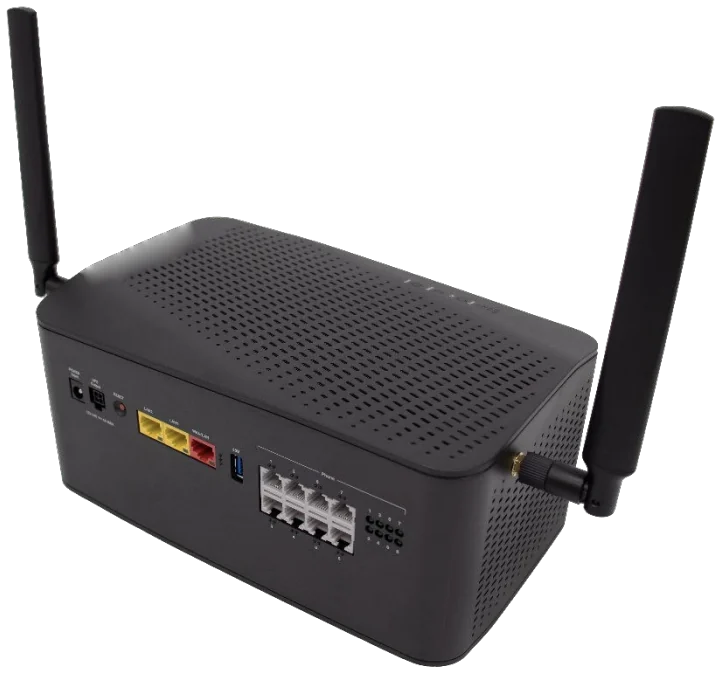
4G LTE 2 antennas 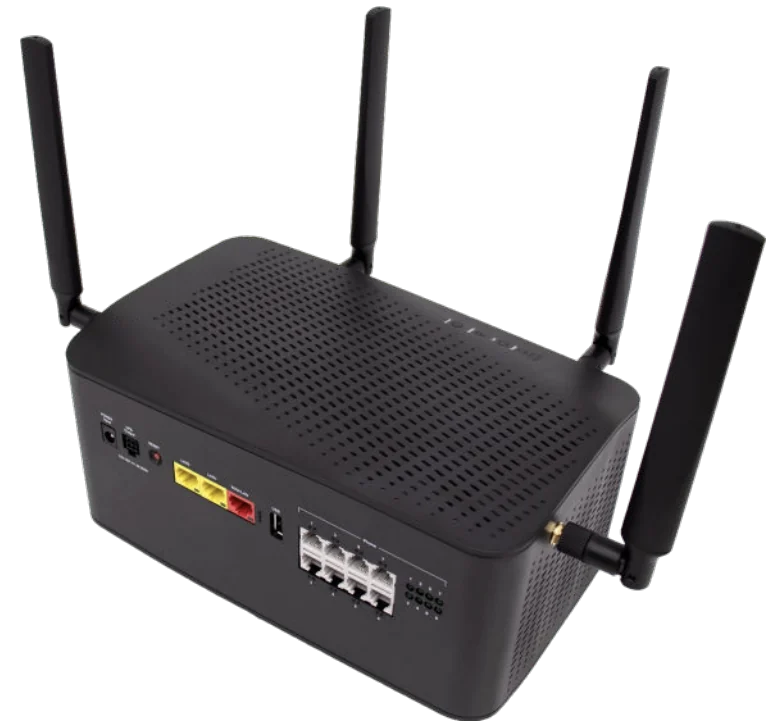
5G 4 antennas
- UL 864 listed for fire alarms
- Connected by a licensed alarm company
- Every line monitored
When the internet or power fails, the alarm lines stay up.
A copper line has one way out of the building. This unit has three, and when one fails it moves to the next without anyone touching it. Pull the pins on the example building and try to take its alarm lines down.

Pull a pin
Each pin holds one thing the building depends on.
Your alarm linesUp
- Building internetIn use
- Cell network 1Standing by
- Cell network 2Standing by
- Built-in batteryStanding by
Everything is normal. All seven lines run over the building's internet.
- Fire alarm 1Up
- Fire alarm 2Up
- Elevator 1Up
- Elevator 2Up
- Burglar alarmUp
- Gate call boxUp
- FaxUp
Upload your phone bill.
A photo or PDF of one recent bill is enough, plus the copper letter if you got one. We match every number to what it runs and email you the audit. It's free.
What we read
Each phone number on the bill, what the carrier calls the line, and what you pay for it.
Black out what you like
Account PINs and payment details can go. We only need the line numbers and the charges.
Who sees it
Only us. It is stored privately, used for your audit, and deleted when you ask.
Right beside the equipment it serves.
The unit sits on a shelf or the wall in the utility room or the elevator machine room. In a building we walked in November 2026, two ordinary phone cords ran from the phone board to the alarm cabinet. Those cords move to the unit; your panels stay where they are.
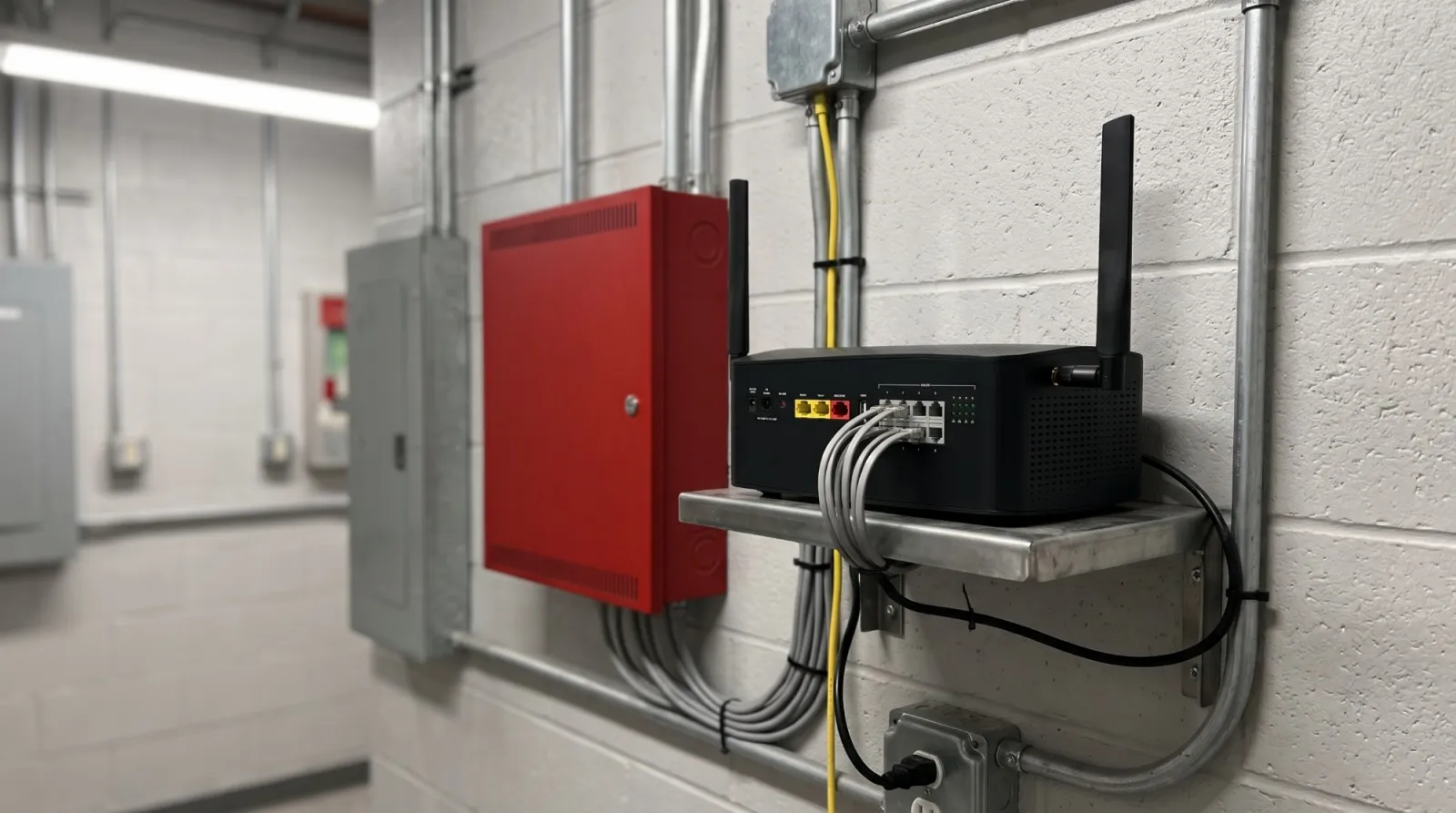
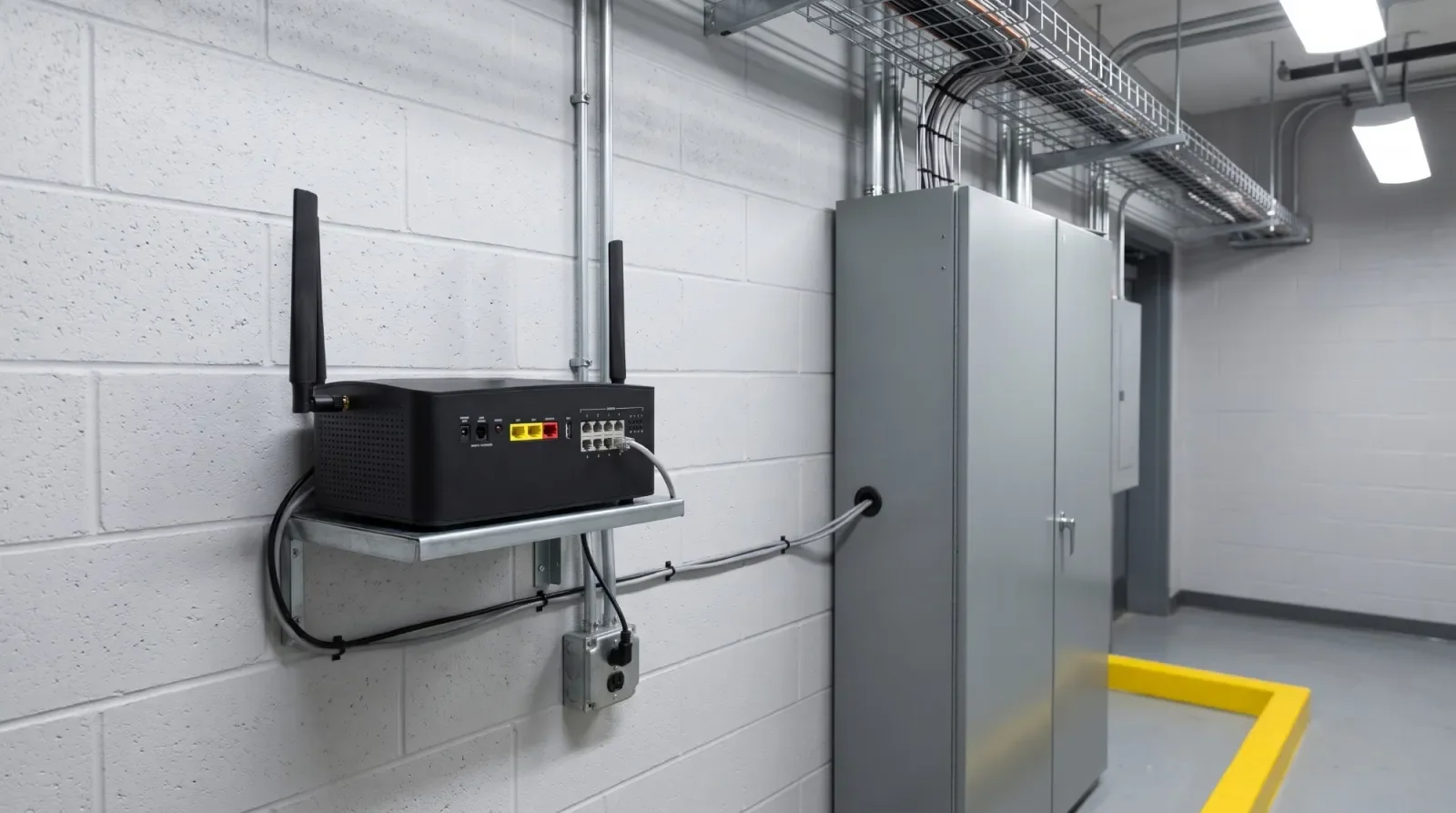
Illustrations of typical installations.
Every side of the unit.
Drag the unit, use the Turn buttons, or pick a part. Each marker stays on its part as the unit turns.
A 3D render of the 4G LTE model. The 5G model has four antennas.
Each line gets its own jack. The cord that goes into your wall jack today plugs in here instead.
Plugs into your building's network. Your lines use the internet you already pay for first.
Two SIM cards on two different cellular networks. If the internet drops, the lines move to cellular; if one carrier is out as well, they move to the other.
Plugs into a wall outlet. When the building loses power, the battery inside keeps the lines up.
Lights on the front show the unit is running. Each line is also watched remotely, from our side.
A vented case 9.8 inches wide. It goes indoors, on a shelf or mounted on the wall, near the panels it serves.
How the move off copper works.
From you, it takes a phone bill and someone to let the alarm technician into the utility room.
Count your lines, or send your bill
Use the line check, or upload a photo or PDF of your phone bill. Either way we go through the bill line by line, tell you what each number runs, and flag any line you pay for that nothing seems to use.
A licensed alarm company connects it
In one visit, the technician moves each panel's phone cord from the wall jack to the unit, then tests every line with your monitoring center before leaving.
We watch every line
Alarm panels place regular test calls. If one of your lines misses its test, we see it and contact you. Each month you get a report: see a sample.
Your copper line, side by side with the unit.
What changes for the fire alarm, elevator and alarm lines when they move off copper.
| Question | Copper phone line | POTS Replacement Device |
|---|---|---|
| Ways out of the building | One wire | Three: building internet, and two cellular networks |
| When that path fails | The line is dead until a repair visit | Moves to the next path automatically, and back when the first one returns |
| In a power outage | Relies on the phone company's line | Built-in battery, up to 24 hours |
| Knowing it works | You find out when a test fails | Every line monitored, and you are alerted |
| Its future | Being retired by phone companies | Runs on internet and cellular |
| Monthly cost | Whatever your phone bill charges per line | A competitive monthly price for each line, quoted free from your bill |
Questions building owners ask.
Last checked . Call (385) 581-3080 if your question isn't here.
What is POTS line replacement?
POTS lines are the copper phone lines (plain old telephone service) that fire alarm panels, elevator emergency phones, burglar alarms and fax machines still use in many buildings. POTS line replacement moves those devices onto a unit that carries the same analog phone signal over the building's internet and cellular networks. The POTS Replacement Device has 8 analog line jacks, cellular failover on two SIM cards and a battery rated for up to 24 hours.
Why are copper phone lines being shut off?
Copper networks are old and costly for carriers to keep up, and on March 26, 2026 the FCC adopted rules that make them easier to retire (FCC 26-19). Verizon has applied to stop copper phone service for its Verizon and Frontier customers wherever an FCC-approved replacement is available, and mails a letter first. AT&T tells business customers to arrange the switch by the date in their letter so the line is not disconnected. Move the fire alarm and elevator lines first: the panel has to reach its monitoring center, and the elevator phone has to reach someone who answers. Sources checked November 20, 2026. If you already have a letter, here is what to do with it.
Can I just take the phone company's replacement?
You can, and for an ordinary office phone it may be all you need. For alarm and elevator lines, check two things first. AT&T's business page (updated June 5, 2026) says its fiber equipment runs on your building's power and that you have to buy a battery backup for phone service to work in an outage. And it is still one path out of the building: if that line or that equipment fails, the panel cannot reach its monitoring center. This unit has its own battery and two cellular networks behind the internet connection.
Will it work with my fire alarm panel?
The unit is UL 864 listed for fire alarm signaling. Your panel keeps its existing phone connections; they plug into the unit instead of the wall jack. A licensed alarm company makes the connection and tests each line with your monitoring center, and your local fire department inspects and accepts the installation. Our fire alarm phone line page covers what NFPA 72 asks of that line.
What happens if the building's internet goes down?
The lines move to cellular automatically. The unit holds two SIM cards on two cellular networks, so an outage at one carrier moves them to the other. When the internet comes back, the lines move back to it.
What happens in a power outage?
The built-in battery keeps the unit and your lines running for up to 24 hours of standby. If the building's modem also loses power, the lines move to cellular.
Do elevator emergency phones work with it?
Yes. Each elevator emergency phone line plugs into its own analog jack on the unit and works over internet or cellular, with the same battery backup. After the move, have your elevator service company place a test call from each car. Our elevator phone line page covers what the code asks of that line.
How many lines does one unit handle?
Eight analog phone lines per unit. A building with more than eight lines uses a second unit.
One box, or a communicator for each system?
If the only thing left on copper is one fire alarm panel, a single cellular communicator from your alarm company may cost less, and your audit will say so. One unit makes more sense when several systems are still on copper: a fire panel with two lines, elevator phones, a burglar alarm, a call box. They share one battery, one internet connection and two cellular networks, and you get one bill and one place that watches every line.
Who installs it?
A licensed alarm company in your state connects each panel to the unit and tests every line. POTS Replacement Device arranges the connection; POTS Replacement Device does not install, service or maintain alarm systems. Alarm companies can partner with us.
Should I choose the 4G or the 5G model?
Both carry the same eight lines with the same battery. The 4G LTE model suits most buildings. The 5G model also provides backup internet for the whole building and is the better choice where 4G signal is weak.
How do I know the lines are working?
Alarm panels send regular test calls to their monitoring center. If one of your lines misses its test, POTS Replacement Device sees it and alerts you.
What does it cost?
A competitive monthly price for each line, on a multi-year term. The line audit is free: send your phone bill and we show what moving each line would cost.
Where is POTS Replacement Device available?
Anywhere in the United States. The panels are connected by a licensed alarm company in your state, because alarm licensing differs from state to state.
Send us a message.
A question about your building, a copper letter, or how the switch works. Cameron Hoffman, the founder, replies by email the same business day.
Or call (385) 581-3080 and leave a message.
Which of your lines are still on copper?
Count them on the line check at the top of this page, or skip the counting and upload your phone bill. The audit is free.